

Tea is one of the most familiar rituals in daily life, yet in perfumery it remains quietly intriguing. Unlike florals that announce themselves or woods that anchor a composition with weight, tea moves with discretion. It does not overwhelm. It steadies. It brings clarity without sharpness and comfort without sweetness.
In recent years, tea notes have become increasingly sought after by those drawn to refined, composed fragrances, scents that feel considered rather than performative. This is not accidental. Tea answers a modern desire for balance: something clean yet grounded, comforting yet restrained.
In this note, we will explore what tea notes truly are in perfumery, how they are constructed, why they feel so wearable, and how they shape a fragrance’s character in ways that are subtle but deeply influential.

What Do We Mean by “Tea Notes” in Perfumery?
Tea does not exist in perfumery as a single essential oil in the way that rose or lavender does. Instead, it is created as an accord, a carefully balanced impression built from multiple materials.
Perfumers recreate the idea of tea through combinations of:
-
citrus peel (often bergamot, lemon, or petitgrain)
-
aromatic herbs
-
soft florals
-
dry woods
-
musks and gentle resins
Together, these elements evoke the sensation of brewed leaves rather than the drink itself. The result is rarely literal. Instead, tea in fragrance suggests dryness, clarity, and calm restraint.
Black tea impressions tend to feel deeper, slightly tannic, and sometimes smoky. Citrus-infused tea effects feel brighter but still controlled. Herbal or floral tea interpretations evoke steam rising gently from a cup rather than sweetness or warmth.
What defines tea as a note is not what it smells like individually, but how it behaves within a composition.
The Sensory Character of Tea in Fragrance
Tea notes are often described using three qualities: clean, comforting, and grounding. Each of these plays a distinct role.
Clean
Tea reads as clean because it is dry rather than sweet. It creates space between notes, preventing compositions from feeling cluttered or heavy. Unlike citrus, which sparkles and then fades quickly, tea offers a steadier, more composed freshness.
Comforting
Comfort here is not indulgent or nostalgic. Tea comforts through familiarity and rhythm. It suggests pause, ritual, and warmth without richness. This makes tea particularly appealing to those who find gourmand or powdery fragrances overwhelming.
Grounding
Tea has a natural anchoring quality. It steadies bright openings and softens florals, allowing them to feel poised rather than expressive. This grounding effect is subtle but transformative, shaping how a fragrance settles on the skin.
Why Tea Notes Feel So Wearable
One of tea’s greatest strengths is its adaptability. Tea fragrances sit comfortably between fresh and warm, never tipping too far in either direction.
This balance allows tea notes to:
-
Wear beautifully across seasons
-
Suit both daytime and early evening
-
Adapt well to skin chemistry
-
Feel appropriate in professional and social settings alike
Tea also appeals to those who prefer fragrances that feel personal rather than declarative. These are scents that invite closeness rather than attention.
Types of Tea Impressions in Perfume
Although tea accords are diverse, they often fall into a few recognisable styles.
Black Tea Impressions
Dry, slightly bitter, sometimes smoky. These often appear alongside spice, woods, or resins, lending structure and composure.

Citrus-Infused Tea
Brightened with bergamot or lemon, but restrained rather than sparkling. These feel crisp yet grounded.

Floral and Herbal Tea Effects
Lavender, jasmine, clary sage, or soft florals recreate the impression of infused leaves. These styles feel gentle, elegant, and particularly calming.
Understanding these variations helps explain why tea notes can feel so different from one fragrance to another.

Tea Notes in Practice: Fragrance Examples
Tea becomes easiest to understand when experienced through composition rather than theory.
In this fragrance, Assam tea forms the backbone rather than a fleeting accent. The opening citrus notes provide clarity, but it is the tea that introduces dryness and structure at the heart. Cardamom and black pepper add warmth without sweetness, while jasmine, rose, and neroli soften the composition.
As the fragrance settles, musks, orris, cashmere, and lavender create a clean, composed base. The tea note grounds the entire structure, preventing brightness from becoming sharp and warmth from becoming heavy.
This is tea expressed as quiet sophistication.

Here, tea appears in a more familiar yet refined form. Bergamot creates the unmistakable Earl Grey impression, while jasmine and lavender add elegance rather than florality. The tea note emerges not as a single moment, but as a thread that runs through the heart of the fragrance.
Warm ambers and soft musks support comfort without richness, allowing the tea to feel clean, soothing, and composed.
This composition illustrates how tea can be both approachable and polished, familiar yet grown-up.

Tea as a Counterbalance in Composition
One of tea’s most elegant functions in perfumery is not as a headline note, but as a structural influence. Tea behaves rather like good tailoring: it refines the shape of everything around it. It introduces dryness, air, and composure, ensuring the composition feels intentional rather than crowded.
How tea tempers sweetness
Sweetness in fragrance is rarely a single ingredient; it is an overall impression created by fruit facets, vanilla-like warmth, amber accords, lactonic nuances, tonka, and soft balsams. When sweetness rises too quickly, a fragrance can feel heavy, youthful, or cloying, especially in warm air.
Tea helps by contributing a tannic, gently astringent dryness, the perfumery equivalent of a clean finish. It does not remove sweetness, but it prevents it from becoming sticky or overly rounded. In practical terms, tea gives sweetness a more grown-up silhouette, bringing it back into proportion.
How tea steadies florals
Many florals are naturally expansive. White florals in particular, orange blossom, jasmine, tuberose, can bloom richly and, if unbalanced, may read as heady or overly lush.
Tea introduces what perfumers often seek in a refined floral: space. It creates the impression of air moving through the bouquet. This “breath” effect makes florals feel:
-
more modern
-
less saturated
-
more wearable over long hours
It is the difference between a room filled with flowers and a room where flowers sit beautifully within the air, present but not overpowering.
How tea restrains spice
Spices can be exhilarating, but they can also dominate. Black pepper, cardamom, clove, and nutmeg bring warmth and texture; if they become too prominent, they can make a fragrance feel busy or sharp.
Tea acts as a quiet mediator. Its dry, slightly leafy character helps smooth the edges of spice, reducing the sense of agitation without flattening the composition. It keeps spice elegant, more like a gentle heat held close to the skin than a dramatic flare.
How tea supports citrus and adds continuity
Citrus is famous for its brightness and equally famous for its fleeting nature. Many citrus-heavy compositions sparkle beautifully at first, then fall away quickly.
Tea helps bridge that gap. Because tea accords often sit in the heart of a fragrance, they create a seam between the top and the base, carrying some of that fresh clarity forward into the middle of the wear. The result is not simply “longer-lasting citrus”, but a fragrance that feels continuous and coherent, rather than top-heavy.
All of these effects point to the same outcome: tea lends restraint and thoughtfulness. It keeps fragrance from becoming overly sweet, overly floral, overly spicy, or overly transient. That is precisely why tea notes so often appear in compositions that aim to feel composed, clean, and quietly intelligent rather than dramatic or performative.
When and How Tea Fragrances Are Best Worn
Tea fragrances excel in situations that call for presence rather than projection. They are not designed to enter a room ahead of you; they are designed to sit close, to feel polished, and to accompany you through the day with a sense of ease.
When tea fragrances shine
Daytime wear
Tea’s dryness and clarity make it particularly suitable for daylight hours. It feels clean and put-together, without becoming overly crisp or sporty.
Work and creative settings
Tea fragrances are ideal in environments where you want to feel composed and focused, yet never distracting to others. Their refined structure often reads as quietly professional.
Transitional seasons
Tea sits beautifully in spring and autumn, when the air is neither fully warm nor fully cold. These are seasons of change, and tea’s balanced nature suits them perfectly, fresh without sharpness, comforting without weight.
Slow mornings and early evenings
Tea notes align naturally with unhurried rituals: a morning that begins gently, or an early evening that signals a softer pace. They support a sense of calm attention, awake, but not hurried.
How to wear tea fragrances well
Tea fragrances reward patience because tea is typically a heart note impression. It often emerges after the initial brightness has settled.
A useful approach:
-
Spray and allow the opening to pass without judgment
-
Revisit the scent after 15–30 minutes, when the heart is clearer
-
Notice the texture: dryness, air, soft warmth, and restraint
-
Pay attention to how it feels over several hours, not only the first impression
Tea tends to become more compelling as it wears, precisely because it is not built around immediate drama.
Tea in perfumery is, at its best, an exercise in restraint. It offers a fragrance profile that feels polished, composed, and quietly intimate, one that stays close, wears beautifully through the day, and rewards those who appreciate nuance over noise. If you have found yourself drawn to scents that feel clean but not sharp, comforting but not sweet, tea is a note well worth exploring more deliberately.
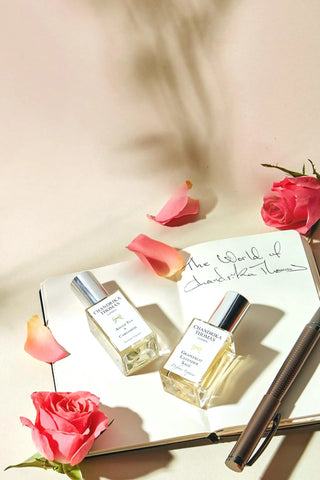
If you would like to experience this style on skin, we invite you to spend time with our tea-led compositions: Assam Tea & Cardamom, with its dry, spiced elegance and softly musked finish, and Earl Grey & Jasmine, where bergamot and tea bring clarity to a gentle floral heart. Try them slowly, allow the opening to settle, and return to them as the heart unfolds, tea is always most convincing once it has had a moment to breathe.
Explore our tea perfumes and discover the one that feels most naturally yours.

